
The short version
This guide is for non-EU citizens. EU, EEA and Swiss citizens follow different rules.
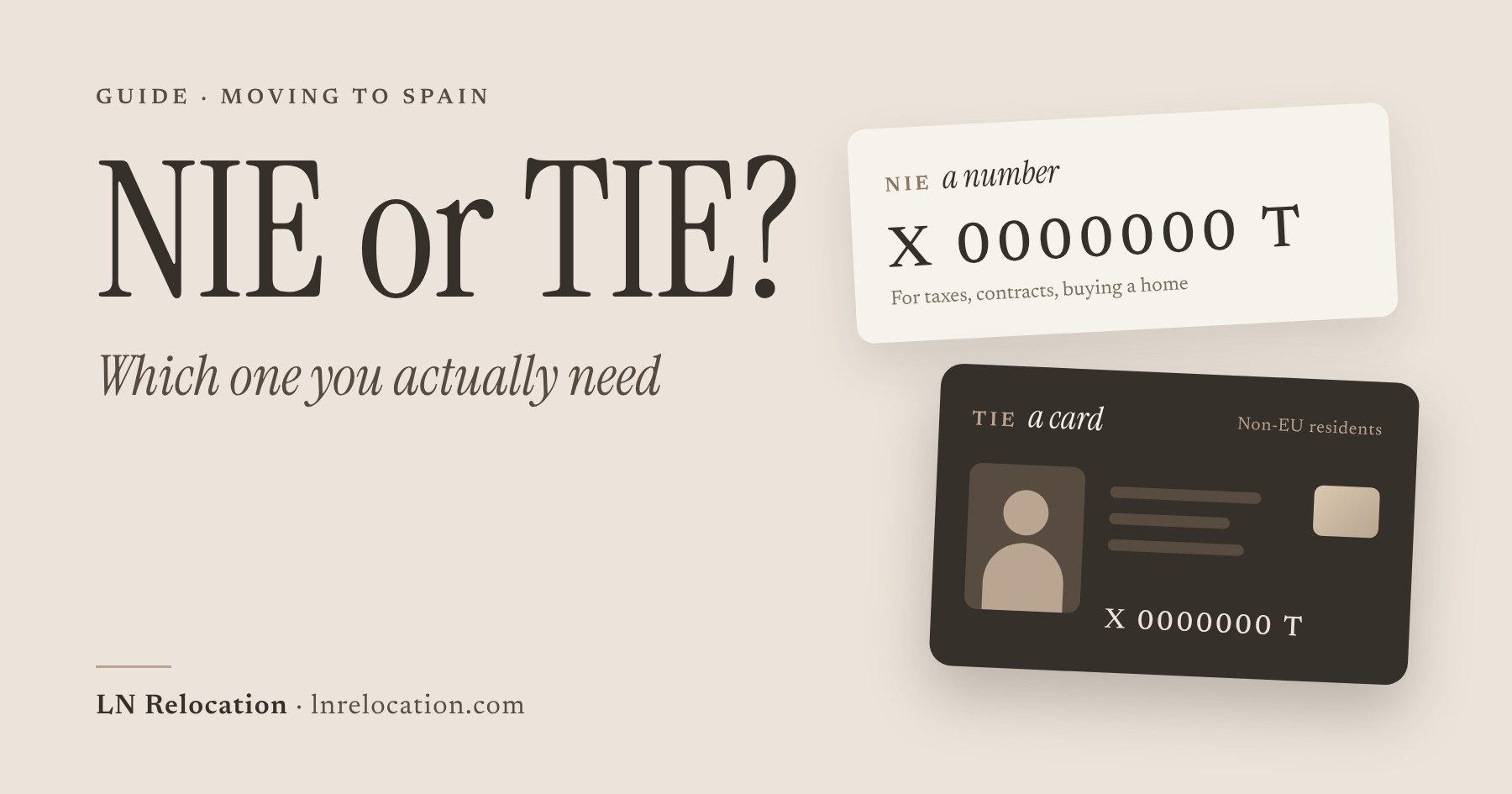
a number
NIE
Your ID number as a foreigner in Spain. You use it for taxes, contracts and buying a home.
For anyone who deals with Spain
a card
TIE
Your residence card, with photo and fingerprints. Your NIE is printed on it.
For non-EU citizens moving here
If you are moving to Spain, your NIE comes printed on your TIE. You don’t need a separate one.
Which one is for you?
A few taps. About thirty seconds.
Why it matters in your first weeks
Almost everything else in Spain waits for these documents.
You need your NIE for
- Getting paid on a Spanish payroll
- Buying a home or a car
- Paying your taxes
- Most bank accounts, rental contracts and utilities
You need your TIE for
- Proving you live here legally
- Signing up for public healthcare
- Exchanging a foreign driving licence
- Coming back into Spain after a trip abroad
That’s why the order matters: one late appointment can hold up everything else.
Some common mistakes
- Applying for the TIE before your authorisation is approved. You need the approval letter from the Spanish authorities first. Without it, the card can’t be issued.
- Missing the one-month TIE window. The clock starts when you enter Spain, not when you find a slot. Book as soon as you know your arrival date.
- Going to your appointment with the fee unpaid, or the wrong box ticked. Form 790-012 has one box per procedure. A mistake can cost you a new appointment.
- Assuming the paperwork is the same everywhere. Depending on the procedure and the province, you may be asked for extra documents, so what you bring can vary from one office to another.
Not sure which of these applies to you? That’s what the free 15-minute call is for.
Good to know. Since 20 May 2025, residence procedures for non-EU citizens follow a new immigration regulation (Royal Decree 1155/2024). This guide reflects it.
Quick questions
Does the NIE expire?
No. The number stays the same for life. What can expire is a residence document, such as the TIE.
Can I work with just a NIE?
No. Working depends on your residence status: you need an authorisation that allows it.
Can someone else apply for me?
For the NIE, sometimes, with your signed authorisation. For the TIE, no: you go in person because your fingerprints are taken.
Moving with family, changing status, or short on time?
On paper, it looks simple. In practice, the appointment, the office and the order are where the weeks go. Fifteen minutes with Liz is often enough to avoid that.
Know someone who’s moving to Spain?
Sources
- Spanish Ministry of Foreign Affairs, Foreigner Identity Card (TIE): exteriores.gob.es
- Policía Nacional, fee form 790 code 012: sede.policia.gob.es
- Royal Decree 1155/2024, immigration regulation in force since 20 May 2025: boe.es
- Ministry of Inclusion, immigration portal: inclusion.gob.es
This guide is general information, not legal advice. Requirements can vary between police offices and change at short notice.